
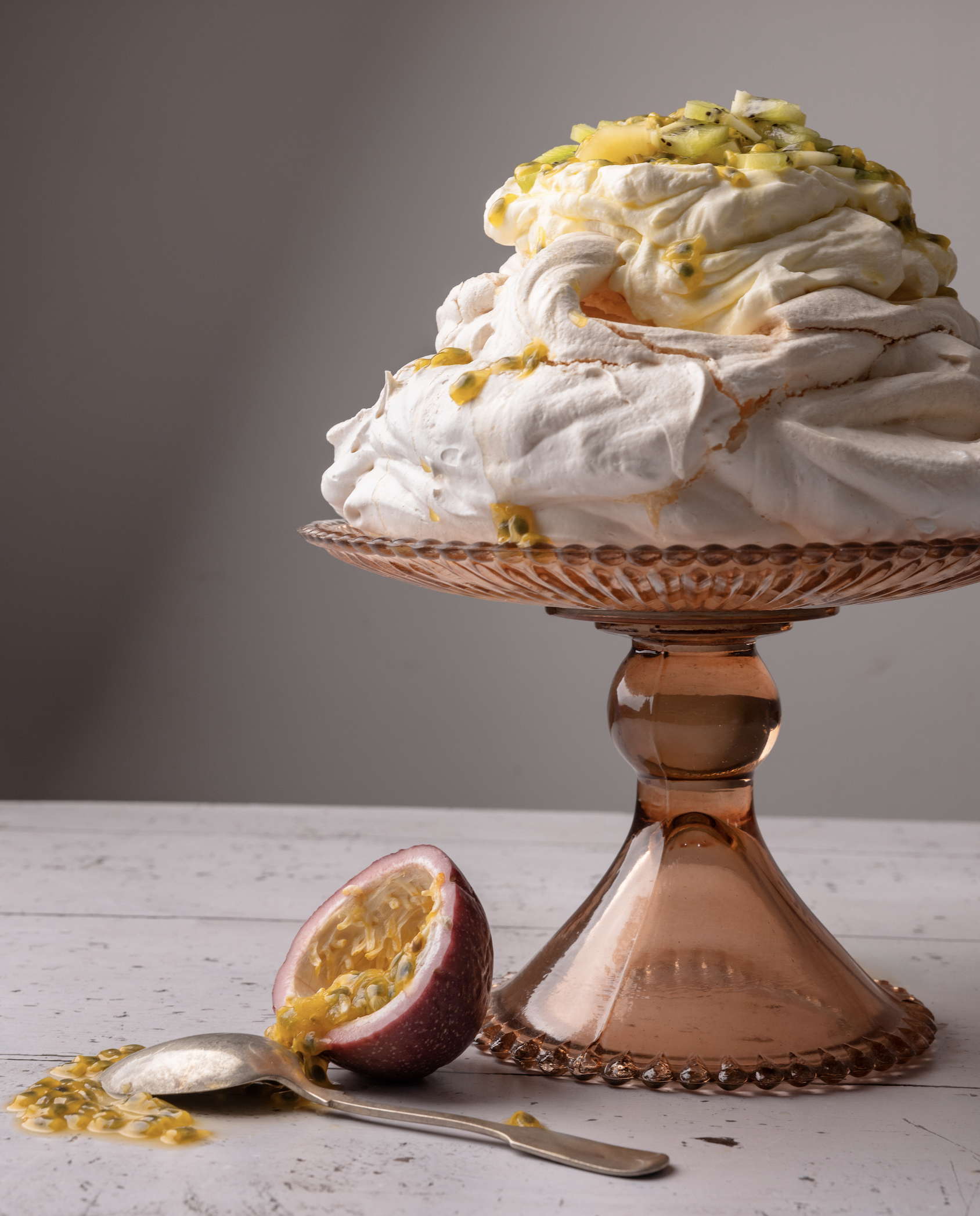
classic pavlova.
Dietary: Gluten Free, Vegetarian
Total Time: 8 hours (includes drying time)
Prep Time: 30 minutes
Cook Time: 1 hour 30 minutes
Serves: 8–10 people
Pavlova:
6 large egg whites, at room temperature (or 220–230 g total if using smaller eggs)
1 ½ cups caster sugar
1 ½ tsp white vinegar
To Serve:
Freshly whipped cream or thick dollop cream
Fresh kiwifruit, peeled and sliced
Fresh passionfruit pulp, scooped from the skins (or fruit of your choice)
(Optional) Icing sugar, for dusting
Method:
Preheat the oven to 150°C (bake) and line a large baking tray with parchment paper.
In a large, clean, room-temperature bowl, use an electric beater to whip the egg whites on high speed until stiff peaks form — the mixture should look glossy and hold its shape (similar to shaving foam).
Gradually add the caster sugar, one tablespoon at a time, beating continuously until all sugar has dissolved. To test, rub a small amount between your fingers — if it feels grainy, continue beating until almost smooth.
Add the vinegar and beat for another 10 seconds on medium speed until incorporated.
Using a spatula, gently pile the meringue into the centre of the prepared baking tray and shape into a tall, round mound. Keep it slightly uneven for a rustic look — the hollows will hold cream and fruit later.
Reduce the oven temperature to 120°C and bake for 1½ hours.
When the timer finishes, turn the oven off without opening the door and leave the pavlova inside to cool and dry completely for at least 6 hours or overnight.
Once cooled, carefully transfer the pavlova to a serving platter or cake stand.
Top with whipped cream, sliced kiwifruit and passionfruit pulp just before serving.
Notes & Variations:
Keep the oven door closed during cooling to prevent cracking.
You can make the pavlova base a day ahead — store it in an airtight container until ready to decorate.
Swap kiwifruit and passionfruit for berries or mango for a seasonal twist.