
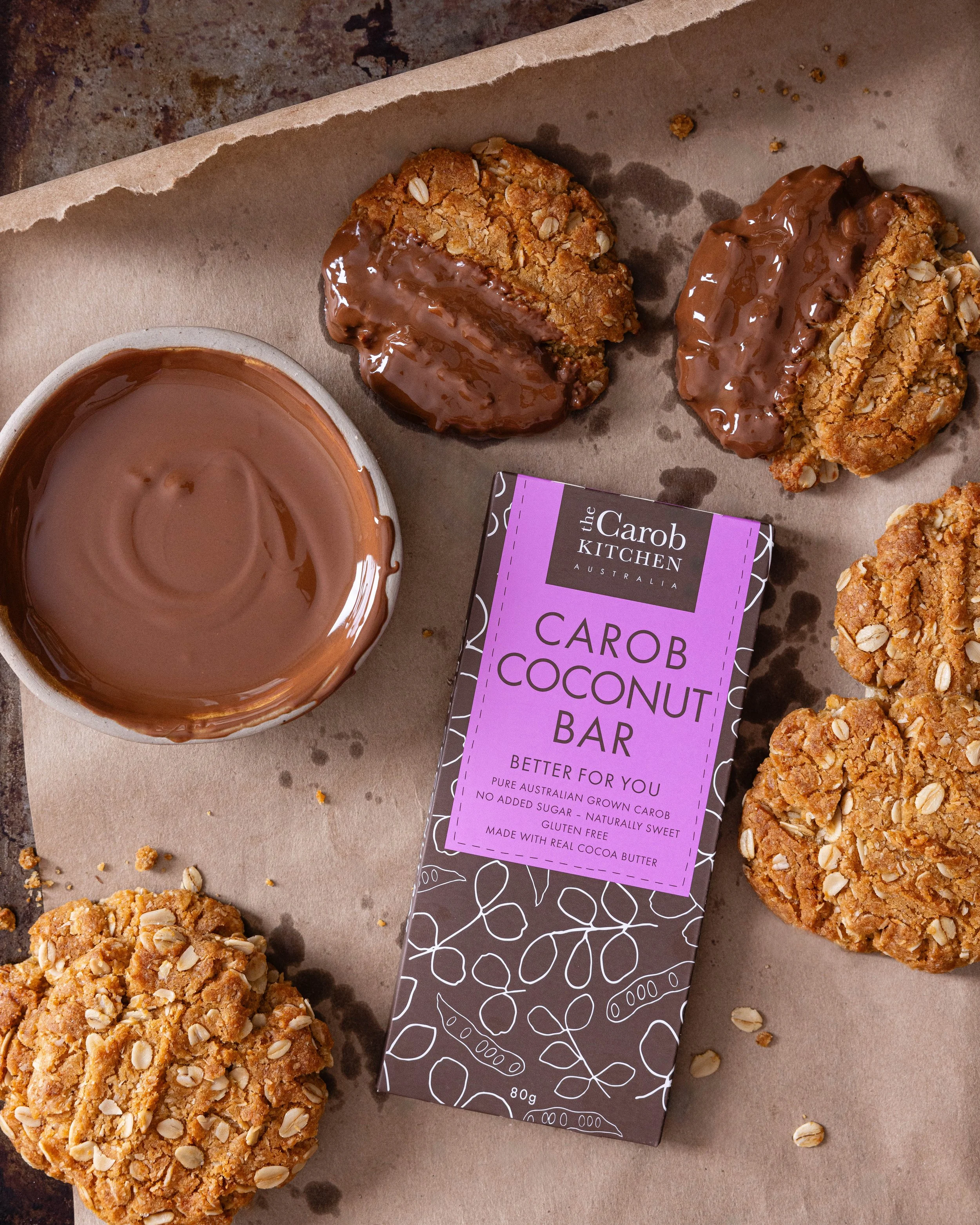
anzac biscuits.
Dietary: Vegetarian
Total Time: 40–45 minutes
Prep Time: 15 minutes
Cook Time: 20–30 minutes
Makes: 9 cookies
Biscuits:
1 cup spelt flour
1 cup desiccated coconut
1 cup rolled oats
¼ cup white sugar
¼ cup brown or coconut sugar
125 g unsalted butter
2 tbsp golden syrup or rice malt syrup
½ tsp baking soda
1 ½ tbsp boiling water
To Serve:
1–2 The Carob Kitchen Carob Milk Bars
Method:
Preheat the oven to 180°C (bake) and line a large baking tray with parchment paper.
In a large mixing bowl, combine the flour, coconut, oats and sugars.
In a small saucepan, melt the butter and golden syrup together over medium heat until bubbling. Remove from the heat and pour into the dry mixture.
In a small cup, combine the baking soda with the boiling water, then add it to the mixture and fold through until well combined.
Scoop heaped tablespoons of dough into your hands and roll into smooth balls. Place them on the baking tray about 2 cm apart.
Gently press each ball down with the back of a fork or spoon.
Bake for 10 minutes, then remove from the oven and flatten the biscuits slightly again.
Return to the oven and bake for a further 5–10 minutes or until golden and fragrant.
Allow the biscuits to cool on the tray for 10 minutes before transferring them to a wire rack to cool completely.
Melt the Carob Milk Bars using a bain-marie (double boiler) method and pour into a small, deep bowl.
Dip half of each cooled ANZAC biscuit into the melted carob, place back on the tray and chill in the freezer to set.
Store the biscuits in an airtight container in the fridge or pantry for up to 4 days.
Notes & Variations:
Add a pinch of cinnamon or nutmeg to the dough for extra warmth and spice.
Swap spelt flour for gluten free flour to make them gluten free.
Sprinkle a little sea salt on top of the dipped carob before it sets for a sweet–salty finish.